Preparedness guide
How to Store Water for Emergencies at Home
Water storage is one of the simplest preparedness upgrades you can make because it solves a problem before you are thirsty, stressed, or standing in line somewhere else. A good home water plan is not complicated. It is a mix of realistic household math, reliable containers, safe storage spots, rotation habits, and one or two backup purification options in case the disruption lasts longer than expected.
This guide is built for practical home preparedness and meant to help you take action before the next blackout, storm, or short-term emergency.
Scan this first
Quick checklist
Use this as your fast-start list, then work through the full sections below to tailor the plan to your household, storage space, daily needs, and backup options.
Store first
- ✓Aim for at least 1 gallon per person per day for a 3-day disruption
- ✓Add extra for pets, heat, cooking, and limited sanitation needs
- ✓Use food-safe bottles, jugs, or stackable containers you can move safely
- ✓Keep some ready-to-drink water where you can reach it fast
Do it right
- ✓Label containers with the fill date and water source
- ✓Store water in cool, dark, indoor spaces away from chemicals and sunlight
- ✓Rotate on a simple schedule you will actually follow
- ✓Check lids, seals, and container condition during every review
Back it up
- ✓Keep unscented bleach or another approved treatment option if appropriate
- ✓Add a filter, purification tablets, or boiling capability as a second layer
- ✓Know where nearby backup water sources are before you need them
- ✓Write down your household water plan instead of trusting memory
Section 1
Start with real household math
Quick checklist
- •Use 1 gallon per person per day as your baseline for short disruptions
- •Add extra for pets, cooking, hot weather, illness, and sanitation
- •Plan separately for home storage, vehicle water, and grab-and-go needs
The most common water-prep mistake is storing an amount that sounds good instead of an amount that matches the household. Start with one gallon per person per day for at least three days, then adjust upward if you have pets, high heat, medical needs, or expect to rely on stored water for more than drinking.
That baseline disappears quickly in real life. People use water for medicine, brushing teeth, quick cleanup, washing hands, mixing food, and keeping kids or pets comfortable. A family of four can burn through a small stash fast if the outage or disruption stretches into a weekend.
Think in layers. Keep some water that is easy to grab immediately, some that is staged deeper for longer disruptions, and a separate plan for vehicles or evacuation if that is part of your risk picture.
Section 2
Choose containers that fit your space and strength
Quick checklist
- •Use food-safe containers designed for water whenever possible
- •Mix smaller grab-ready containers with a few larger high-volume ones
- •Avoid cracked, sun-damaged, or mystery containers that were not meant for drinking water
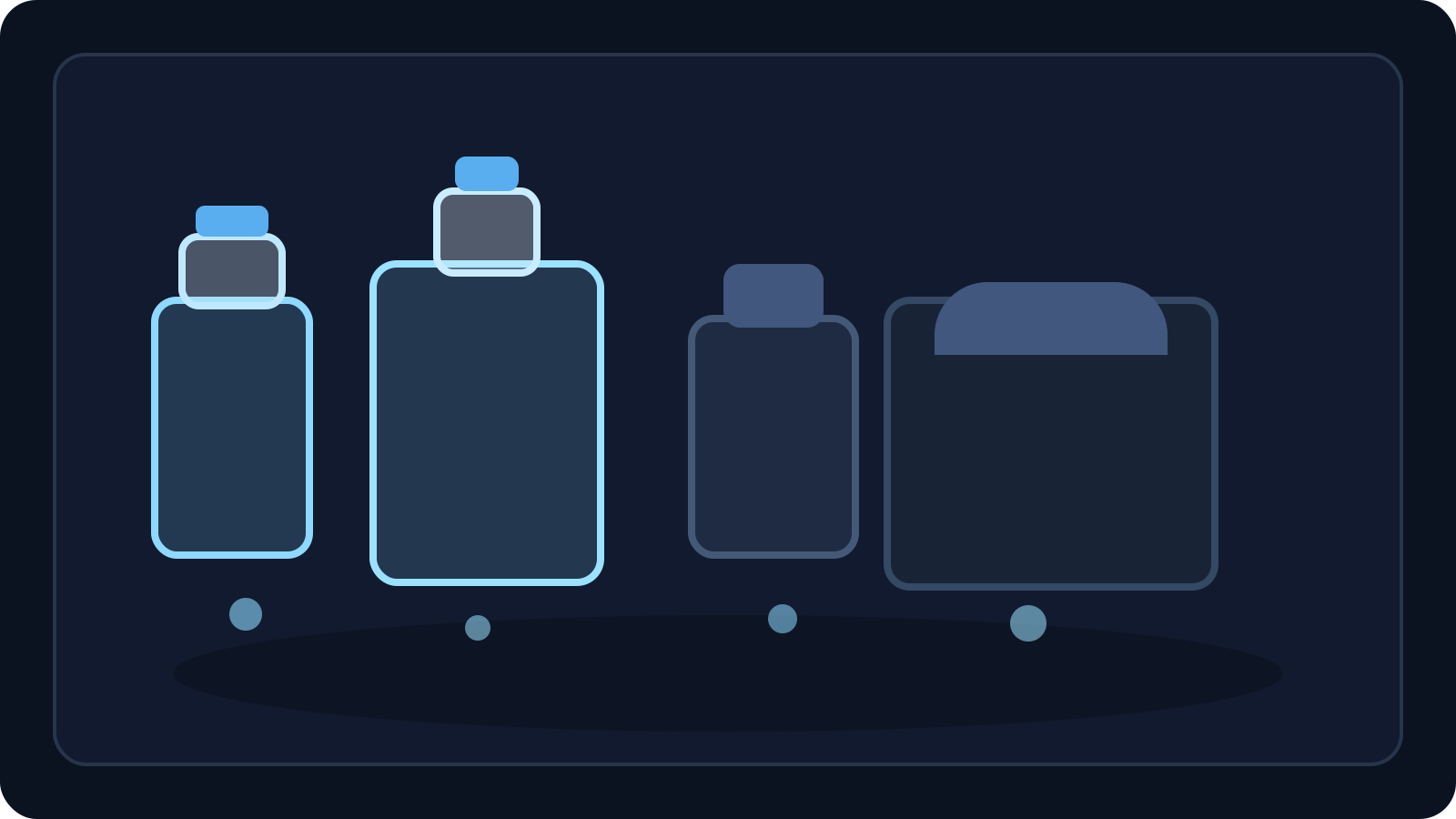
Container choice matters because good storage is only useful if the water stays safe and the container is practical to handle. Small commercial bottles are easy to rotate and move. Mid-size jugs are good for household access. Larger stackable containers give you better volume per square foot but become heavy fast.
Choose a mix that matches your home and your body. A large container that nobody in the house can comfortably lift is harder to use than several smaller ones that can be moved without spilling or injury.
Food-safe, purpose-made water containers are the safest default. If you reuse containers, make sure they are clean, undamaged, and suitable for drinking water. Skip anything that held chemicals or anything that is already degrading.
Section 3
Pick storage spots that stay cool, dark, and clean
Quick checklist
- •Store water indoors when possible and keep it out of direct sunlight
- •Do not park drinking water next to fuel, paint, pesticides, or strong cleaners
- •Spread storage across a few locations so one leak or access problem does not wipe out everything
Good storage spots protect the water and make the system easier to live with. Cool, dark, indoor spaces are usually best because they reduce heat stress on containers and help preserve water quality over time.
Avoid storing drinking water beside gasoline, solvents, paint, pesticides, or other harsh chemicals. Even sealed containers should not live in places where spills, fumes, or repeated heat swings are likely.
If you have the room, divide your supply into more than one location. A little in the pantry, a little in a utility closet, and a little in another protected space is better than one giant stash that becomes inaccessible because of clutter, a leak, or one damaged shelf.
Section 4
Fill, label, treat, and rotate on a real schedule
Quick checklist
- •Label every container with the fill date and source
- •Clean containers before use and follow local guidance for tap-water storage
- •Tie rotation to an easy trigger like daylight savings, storm season, or a recurring calendar alert
Stored water fails quietly when nobody remembers what was filled when. A label with the fill date, source, and any treatment note makes the whole system easier to trust and easier to maintain.
If you are using municipal tap water, your local guidance may already treat it as safe for storage in clean containers. If you are filling from another source, sanitize containers carefully and follow trusted treatment instructions instead of guessing.
The key is not building the perfect spreadsheet. The key is having a rotation rhythm that actually happens. A calendar reminder every six months, tied to a seasonal routine, is usually better than an elaborate system that gets ignored.
Section 5
Add backup purification before you need it
Quick checklist
- •Keep at least one secondary way to make questionable water safer
- •Do not rely on one gadget for every scenario
- •Learn the basics before an outage instead of reading instructions thirsty
Storage solves the short-term problem, but longer disruptions require a second layer. A filter, purification tablets, unscented household bleach where appropriate, or the ability to boil water gives you options if your stored supply runs low.
Different tools solve different problems. Some filters remove sediment and many contaminants but not every biological or chemical risk. Tablets are compact and easy to stash, but they change taste and require wait time. Boiling works, but it requires fuel, a safe pot, and time.
You do not need to turn your home into a water lab. You just need one or two backup methods you understand well enough to use under stress.
Section 6
Build a simple home water plan
Quick checklist
- •Write down how much you store, where it is, and when it gets checked
- •List backup water sources and how you would transport or treat that water
- •Assign who handles rotation, refills, and emergency setup if more than one adult is involved
A water supply becomes far more useful when it is part of a written plan. Keep a short note of how many gallons you have, where they are stored, which containers get used first, and which backup purification tools live with them.
Also think beyond the house. If you had to leave, where would you get water on the road? If the disruption lasted longer, what local sources could you reach safely, and how would you carry that water home?
Even a one-page plan removes friction. It helps every adult in the home understand the system, and it keeps your water prep from living only inside one person’s memory.
Section 7
Common mistakes that make water prep weaker
Quick checklist
- •Storing too little because the math was never written down
- •Buying large containers without testing whether you can actually move them
- •Forgetting pets, medications, sanitation, or summer heat
- •Owning filters but never reading the instructions or testing them
Most water-prep failures are boring, not dramatic. People underestimate how much they need, stash it somewhere hot, forget to label it, or assume they will figure purification out later.
Another common mistake is focusing only on the gear. Fancy containers and filters do not help if the water is inaccessible, the lids are compromised, or nobody in the home remembers where the supplies are stored.
The strongest system is usually simple: enough water for the first few days, containers you trust, a rotation schedule you follow, and one or two backup purification options that you have already practiced with once.
Section 8
Simple water storage starter checklist
Quick checklist
- •Baseline storage: 1 gallon per person per day for at least 3 days
- •Containers: food-safe bottles, jugs, or stackable water containers
- •Storage location: cool, dark, clean spaces away from chemicals and direct sun
- •Rotation: fill date labels plus a recurring calendar reminder
- •Backup treatment: filter, tablets, boiling plan, or another approved option
- •Written plan: where the water is, which containers get used first, and what happens if you need more
Start with enough drinking water for the household, then improve the system in layers. Add better containers, safer storage spots, a rotation routine, and one backup purification method you understand. Water preparedness works best when it is boring, dependable, and easy to maintain.
Keep reading
Related preparedness guides
Open another practical guide to keep building your plan without bouncing around the site.
Join the network
Preparedness is better with a network
Create a free account to follow preparedness discussions, join groups, and keep learning beyond the guide.